


Rayonshine Reference · Sizing & Installation

Choose the right light, in the right place, at the right height.

A practical, room-by-room reference for selecting lighting that fits — in scale, brightness, and proportion to the space it lives in. Use the formulas and ranges below to specify your fixture before you order.

Imperial · Inches & FeetDesigner-testedUpdated 2026
Chapter One · Sizing

The right scale for every room.

A fixture's job is to feel inevitable in the space it occupies — neither shrunk by a vast room nor crowding a modest one. The numbers below are starting points, not laws.

Section A · Dining Room

Dining room

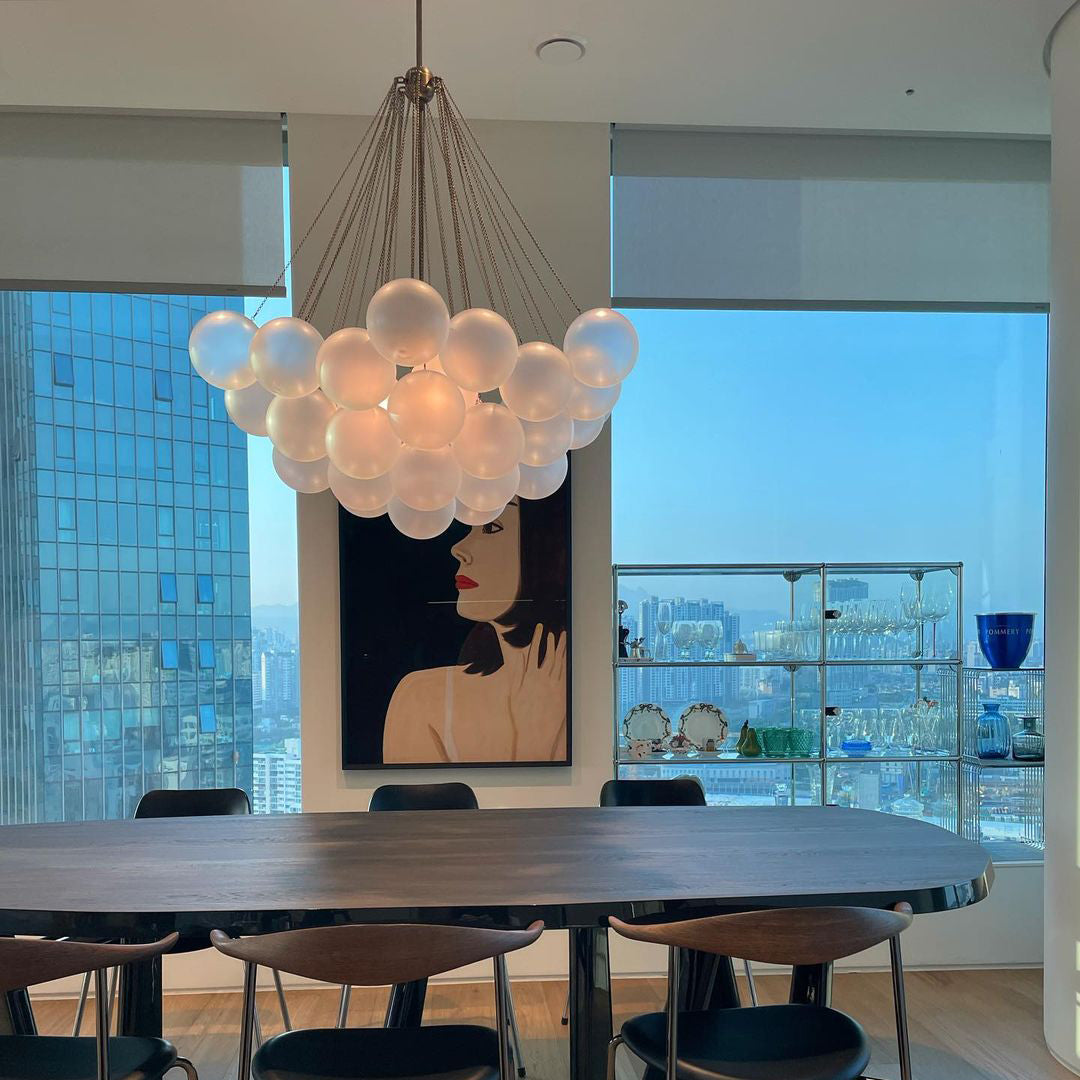
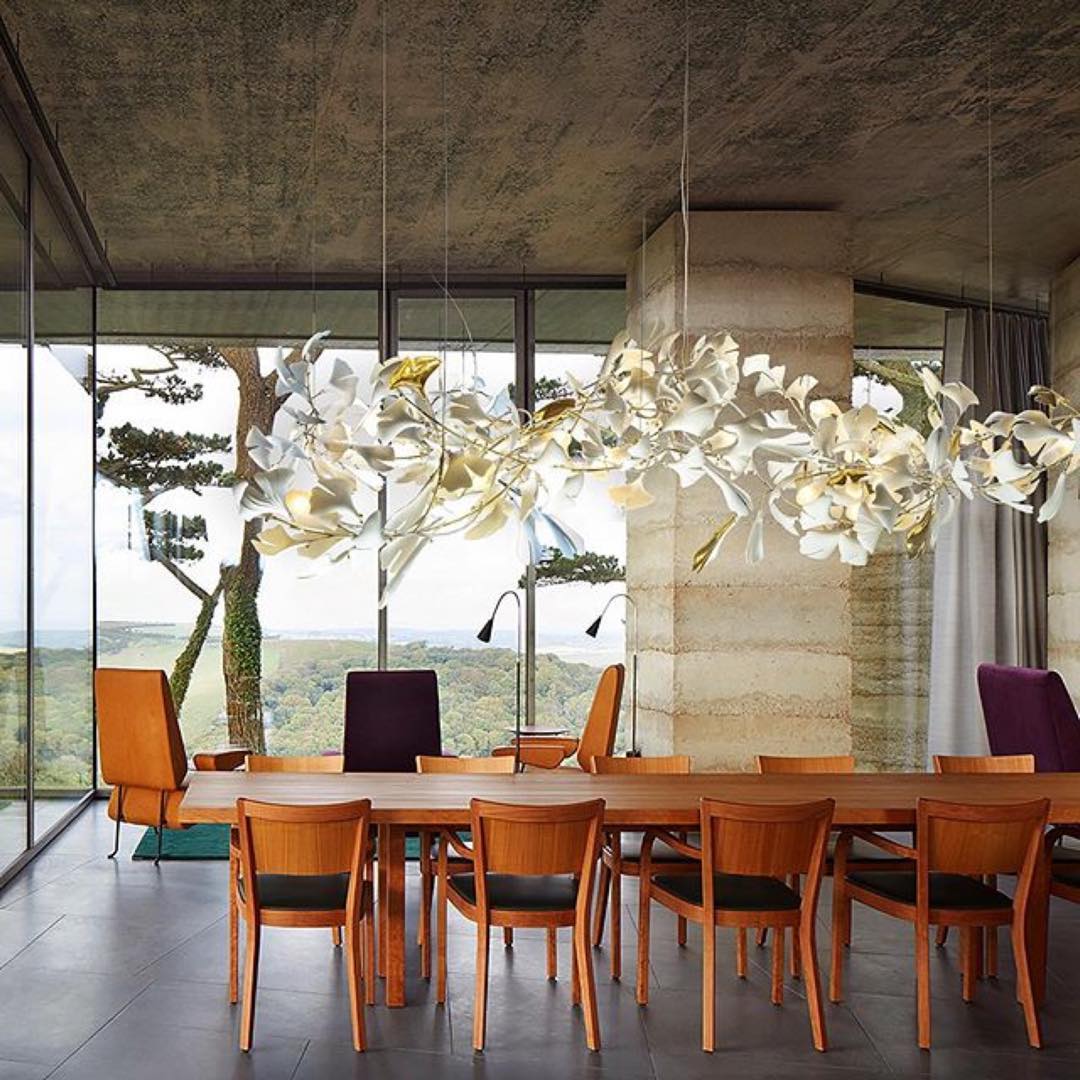
Dining fixtures are anchored to the table, not the room. The pendant or chandelier should sit at two-thirds the table width, centered along the long axis, with at least 6″ clear space on either short end.

For rectangular tables seating 6 or more, consider a linear pendant or two smaller fixtures hung in line.

Diameter⅔ of table widthOr table width minus 12″
Hang Height30–36 above tableAdd 3″ per foot above 8-ft ceiling
Lumens3,000–6,000 lmPair with dimmer
Section B · Living Room

Living room

For a fixture that anchors the room rather than furniture, use the L + W rule: add the room's length and width in feet — the sum, read in inches, is your ideal diameter.

A 14 × 16 ft room calls for a fixture roughly 30″ in diameter. Round up for high ceilings; pair with floor lamps and sconces.

DiameterLength + WidthIn feet, applied as inches
Bottom Clearance7 minimumFloor to lowest point
Lumens1,500–3,000 lmLayer with table & floor lamps
Section C · Bedroom

Bedroom & bedside

A center bedroom fixture follows the L + W rule, but most bedrooms benefit more from paired bedside pendants in place of (or alongside) table lamps — freeing nightstand surface and creating a softer light field.

Hang each pendant 20–24″ above the mattress, centered over each nightstand. Always pair with a dimmer.

Bedside Drop20–24 above mattressOr 60″ from floor
Center FixtureL + W ruleSubtract 4″ for cozier feel
Lumens1,500–4,000 lm totalAmbient + bedside + reading
Section D · Kitchen Island

Kitchen island

Multiple smaller pendants outperform a single large one — they distribute light along the work surface and create rhythm overhead. One pendant for every 24–30″ of island length, equally spaced.

For a 6-ft island, three small or two medium pendants both work; for an 8-ft island, three medium pendants is cleanest.

Spacing30–36 on centerEqual between and from each end
Hang Height30–36 above counterCounter typically 36″ from floor
Lumens450–600 lm eachBright for prep, soft for dining
Section E · Entry & Foyer

Entry & foyer

An entry fixture greets the room before any furniture does. Use the L + W rule for diameter, but in two-story foyers, hang the bottom of the fixture aligned with the second-story floor — so it reads from both levels.

In single-story entries, maintain at least 7 ft of clearance from the floor.

DiameterL + W ruleRound up generously
Two-StoryAligned with 2nd floorBottom at 2nd story floor line
Lumens1,200–4,000 lmHigher for double-height
Section F · Bathroom Vanity

Bathroom vanity

Side sconces beat overhead lighting at the vanity nearly every time — they cast light across the face rather than down onto it. Mount sconces at eye level, 28–36″ apart, centered on either side of the mirror.

If the mirror is too narrow, a single horizontal vanity light at 75–80″ AFF is the next best choice.

Sconce Height66 AFF, centeredRoughly eye level
Spacing28–36 apartWider for double vanities
Lumens~700 lm eachDamp-rated; CRI ≥ 90
Chapter Two · Method

Two formulas, every fixture.

Behind the room recommendations are two reliable formulas designers have used for decades. Once internalized, you can size any fixture without consulting a chart.

Formula One

The L + W rule.

For chandeliers and pendants centered in a room, measure length and width in feet, then add. Read the result as inches — that's your ideal diameter.

This produces a fixture that's visually proportionate from any angle and scales naturally with ceiling height.

Equation
Length+Width=⌀ inches
Example — A 12′ × 16′ living room. 12 + 16 = 28. Choose between 26″ and 30″. For ceilings above 9 ft, round up by 10–15%.
Formula Two

The two-thirds rule.

For dining tables, kitchen islands, and console-mounted fixtures, the chandelier should sit at roughly two-thirds the width of the surface beneath it.

This ensures clear sightlines across the table and prevents the fixture from feeling crowded or stranded.

Equation
Surface×0.67=⌀ inches
Example — A 60″ round dining table. 60 × 0.67 ≈ 40. Choose between 36″ and 42″. Allow 6″ minimum clearance on every side.
Chapter Three · Calculator

Size your fixture, in seconds.

Enter your dimensions and ceiling height. The calculator returns a recommended diameter, hanging height, and total lumens. Toggle between room and table modes.

ft
ft
ft
Recommended Diameter
30
For balanced visual scale.
Hanging Drop
36
Bottom of fixture above floor.
Target Lumens
3,360lm
Total ambient light.
Chapter Four · Height

How high should it hang?

Hanging height changes everything — too high and the fixture floats; too low and it crowds. All measurements assume an 8-ft ceiling; add 3″ for every additional foot.

A.
Above Dining Table
30–36″
From bottom of fixture to top of table.
B.
Above Kitchen Island
30–36″
From bottom of fixture to countertop.
C.
Living Room / Foyer
7′ minimum
Floor to lowest point of fixture.
D.
Bedside Pendant
20–24″
From bottom of fixture to mattress top.
Chapter Five · Bulbs

Color temperature, by room.

Bulb color temperature, measured in Kelvin (K), is the difference between a fixture that flatters a room and one that fights it. Lower values feel warm and golden; higher values feel crisp.

2,200K

Candlelight

Mood · Ambient

The deep amber glow of incandescent or candle flame. Best for accent fixtures and exposed-filament bulbs where atmosphere is the point.

2,700K

Soft White

Living · Bedroom · Dining

The Rayonshine default. Warm, flattering, comfortable for evening rooms. Pairs beautifully with brass, wood, and warm-toned interiors.

3,000K

Warm White

Kitchen · Bath · Hall

Slightly crisper than 2,700K — useful where task accuracy matters but warmth is still wanted. Most-recommended for kitchens and baths.

4,000K+

Cool / Daylight

Workshops · Garages

Crisp and clinical. Reserved for workshops, laundry, and utility spaces where neutrality and visibility take priority. Avoid in living areas.

Chapter Six · Installation

From box to ceiling, in five steps.

A clean installation sequence prevents the most common mistakes. Follow these steps in order, and engage a licensed electrician for any wiring work.

i
Step One

Inspect

Open the box on a soft surface. Confirm every component matches your packing slip. Photograph any damage immediately.

ii
Step Two

Cut Power

Switch off the breaker. Verify with a voltage tester at the existing fixture. Never trust the wall switch alone.

iii
Step Three

Mount

Secure the bracket to the electrical box. Confirm the box is rated for the fixture's weight — heavy chandeliers need a fan-rated brace.

iv
Step Four

Wire

Connect black-to-black, white-to-white, ground-to-ground with wire nuts. Hang from the safety chain before tightening.

v
Step Five

Finish

Install bulbs, attach shades, tighten the canopy flush. Restore power, test on every switch position, confirm dimmer compatibility.

Chapter Seven · Practice

What to do, and what to skip.

The mistakes we see most often have less to do with skill than with sequence. These habits — most taking under a minute — prevent the majority of damage and warranty claims.

+ Do

Best Practices

  • Photograph the unboxing — every layer of packaging, in order.
  • Pair every dimmable fixture with a compatible LED dimmer.
  • Hire a licensed electrician for hardwired installations.
  • Test the fixture on the floor before lifting to the ceiling.
  • Use damp-rated bulbs in bathrooms and covered porches.
  • Match bulb wattage to the fixture's labeled maximum.
  • Order Safety Insurance for fixtures with glass or crystal.

Don't

Common Mistakes

  • Trust the wall switch — confirm power off at the breaker.
  • Hang heavy chandeliers from a standard ceiling box.
  • Mix color temperatures across fixtures in the same room.
  • Discard packaging until the fixture is fully installed.
  • Install over a finished floor without a drop cloth.
  • Ignore manufacturer-recommended bulb types or wattages.
  • Use a standard switch with LED-only fixtures.
Chapter Eight · Reference

Common questions.

A few of the questions our care team hears most often. Write to us if your answer isn't here — we respond within two business days.

What if my ceiling is much higher than 8 feet?

For each foot above 8 ft, add roughly 3″ to your hanging drop. For a 10-ft ceiling above a dining table, hang 36–42″ above the tabletop. For very tall foyers, consider a multi-tier chandelier or a long stem-mounted fixture.

Can I install a Rayonshine fixture myself?

Plug-in fixtures are user-installable. Hardwired fixtures — chandeliers, pendants, sconces, flush mounts — should be installed by a licensed electrician. Most jurisdictions require licensed installation, and improper wiring is excluded from our Limited Warranty.

How do I know if my electrical box can support a heavy fixture?

Standard residential ceiling boxes are rated up to 50 lbs. Fixtures over 50 lbs require a fan-rated brace or a dedicated heavy-duty box anchored to ceiling joists. Each fixture's weight is listed on its product page.

What lumens do I need for my room?

Baseline: 20 lm/sqft for living rooms and bedrooms, 30–40 for kitchens and baths, 50+ for task surfaces. A 200 sqft living room needs ~4,000 total lumens distributed across all sources, not a single fixture.

Are Rayonshine fixtures dimmable?

Most fixtures ship dimmable; product pages note any exceptions. You'll need a dimmer-compatible bulb (most LEDs today) and a compatible LED dimmer switch — not a legacy incandescent dimmer.

Can I use Edison-style filament bulbs?

Yes — vintage-look LED filament bulbs are an excellent match, particularly for fixtures with exposed sockets. Confirm the base type (E26 in the U.S., E27 internationally) and the maximum wattage.

What if my space doesn't match these examples?

Send us a photo and a few measurements — ceiling height, room dimensions, and where the existing electrical box sits. Our design team will recommend specific fixtures and confirm sizing before you order.

Still uncertain? Send us your room.

If your space doesn't match any example above — odd geometry, sloped ceilings, an exposed beam — share a photo and a measurement. Our designers will recommend the right fixture before you commit.